Whenever markets fall or go through a correction, conversations with investors tend to change. Calls increase, messages start coming in, and understandably there are questions about what’s happening in the market. During such phases, our role as


Markets
 By Aishwariya Vasudevan
March 27, 2026
By Aishwariya Vasudevan
March 27, 2026
7 Questions Investors Ask When Markets Fall
By Aishwariya Vasudevan
March 27, 2026
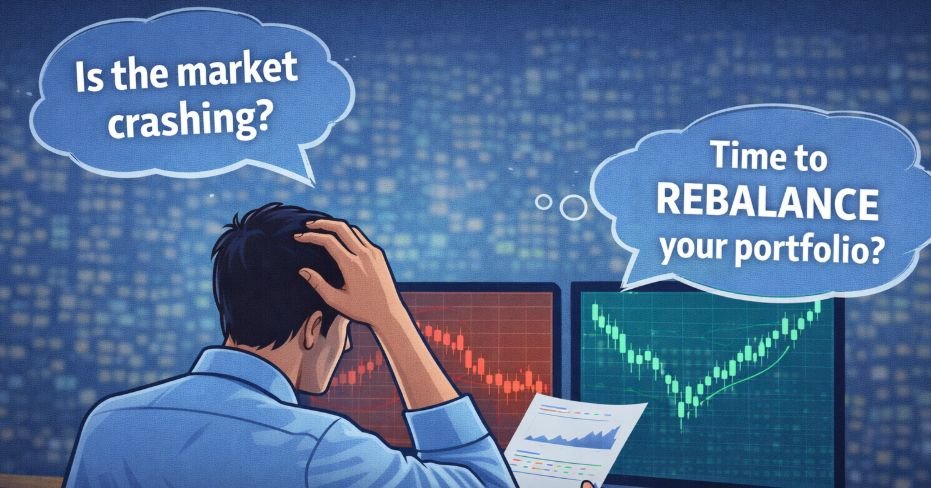
Whenever markets fall or go through a correction, conversations with investors tend to change. Calls increase, messages start coming in, and understandably there are questions about what’s happening in the market.
During such phases, our role as advisors often becomes even more important. Helping investors step back from the noise, stay focused on their long-term goals, and avoid decisions driven purely by short-term market movements.
Over the years, we’ve noticed that during volatile phases many investors tend to ask the same questions. If you’ve been feeling uncertain during a market decline, you’re certainly not alone.
Here are some of the most common questions our investors ask when markets fall.
1. Is this the beginning of a major market crash?
Whenever markets fall sharply, headlines tend to amplify fear. It’s common to hear words like “crash” or “panic,” which can understandably make investors anxious.
However, corrections are a natural part of equity markets. Even in strong bull markets, temporary declines occur along the way. Markets have always moved in cycles phases of decline are often followed by recovery and growth.
As Warren Buffett famously said, “Be fearful when others are greedy, and greedy when others are fearful.” Periods of uncertainty often create opportunities for long-term investors.
2. Why is my portfolio showing negative returns?
During market corrections, it is completely normal for equity portfolios to temporarily show negative returns. Even well-diversified portfolios go through such phases.
Equity investing works best when viewed over longer time horizons. Short-term fluctuations are simply part of the journey toward long-term wealth creation.
During sharp corrections, I sometimes jokingly tell investors that the best strategy might be to avoid opening the portfolio app for a few days. While said light-heartedly, the point is simple — reacting emotionally to short-term market movements rarely helps in long-term investing.
Investors who remain patient during these periods often benefit when markets eventually recover.
3. Should I redeem my mutual funds before markets fall further?
It’s natural to wonder whether markets might fall further before recovering. During corrections, many investors feel tempted to exit and wait for clarity.
The challenge is that timing the market consistently is extremely difficult. Investors who exit during declines often struggle to re-enter when markets recover.
Markets can move quickly, and missing even a few strong recovery days can significantly impact long-term returns.
4. Should I stop my SIP since markets are falling?
This is one of the most common concerns during market corrections. When portfolios show temporary losses, continuing investments can feel uncomfortable.
But falling markets can actually benefit SIP investors. When markets decline, SIPs buy more units at lower prices, helping reduce the average cost over time.
Some of the most meaningful long-term gains come from continuing SIPs during periods of volatility.
5. Should I consider investing in gold or real estate now?
During periods when equity markets are volatile, some investors start wondering whether they should shift their investments into other assets such as gold or real estate.
While both gold and real estate can play a role in a well-diversified portfolio, decisions like these should ideally be based on long-term asset allocation rather than short-term market movements.
For example, gold has seen a strong rally recently and is currently trading near its peak levels. Historically, buying any asset when it is already at elevated levels can increase the risk of disappointing returns in the near term.
Each asset class serves a different purpose in a portfolio. The key is maintaining the right balance based on your financial goals and time horizon.
6. Should I try to predict what markets will do next?
During uncertain phases, it’s natural for investors to try and predict what might happen next. Financial headlines are filled with confident forecasts about where markets are headed.
However, markets are always dealing with some form of uncertainty — there will always be something influencing sentiment.
As Charlie Munger once said, “The big money is not in the buying and selling, but in the waiting.” Long-term investing is less about predicting the future and more about staying disciplined.
Markets move in cycles, and some of the strongest recoveries often happen shortly after sharp declines.
7. Should I invest more money now?
If you already have SIPs running, it usually makes sense to continue them. SIPs naturally help investors take advantage of falling markets.
For investors with additional funds, one approach could be to temporarily park money in relatively stable options such as arbitrage funds and then deploy it into equity funds through switches or systematic transfer plans as market conditions evolve.
During periods of heightened volatility, certain investors with a higher risk appetite may also choose to take a more contrarian approach. In conversations I’ve had with a few fund managers recently, some mentioned that they are gradually looking at opportunities in sectors such as IT, which have seen corrections in recent months.
The idea behind such an approach is that periods of market weakness can sometimes create attractive valuations in certain sectors or companies.
However, these decisions are best taken in alignment with your overall financial goals and risk tolerance, ideally in consultation with your advisor.
Final Thoughts
Market corrections can feel uncomfortable, but they are an inevitable part of investing. Every market cycle includes periods of optimism as well as phases of uncertainty.
What often makes the biggest difference is not predicting every market movement, but remaining patient and disciplined through different cycles.
Our role is to help investors stay focused on their long-term goals, navigate uncertainty calmly, and continue building portfolios that support a life of abundance.
The prose encourages presence. Each phrase slows perception, guiding the reader into attentive awareness and deeper connection with the material.
Very well written, Aishu. Clear, simple and easy to understand. Congratulations. Just read it. As I said, didn’t have any questions, but this was a good read. Thank you
There is a meditative grace to your writing. Ideas emerge with calm precision, letting the reader engage deeply without feeling rushed or pressured.